Saturday, August 6, 2016

Aadhaar like biometric system could transform african countries

Governments in African Countries are counting on a technology employed in India in the Aadhaar project to help them climb out of poverty. Aadhaar as everyone knows is the world's largest bio-metric enrollment and authentication system.
The key problem with all pervading illiteracy and corruption is that citizen registration systems fail. This causes undocumented people who do not have any way of proving who they are. Scantily educated people in poverty ridden countries cannot appreciate the importance of having bank accounts as a means of financial security. Finally whenever the governments try to provide relief to them either in terms of monetary benefits or in kind, they are cheated, due to lack of a verifiable identity.

Saturday, June 4, 2016

Failures of the Narendra Modi government so far


It is my opinion that even if you like a government, it does not hurt anyone by constructive criticism. I have collated some news posts, esp that from congress spokespersons from various news sites. If these make sense and seem to have a ring of truth then the government does need to act fast.

Jobless growth
It’s causing a lot of consternation in the people but nobody is vociferous about it. Export industries have reduced workforce. Public sector, by far the largest employer, employs only 18 million as compared to 19.5 million two decades back. Software automation has reduced labour requirements of ITES. Slow growth in agriculture has reduced the sheen in farming as a source of livelihood.
Below normal monsoons
Two years of below normal monsoons have caused all reservoirs to go dry. In searing heat people are eagerly awaiting monsoons and if it is not evenly distributed may cause mass migrations within the country.
No GST due to non co-operation with opposition
The center being adamant and not yielding to the demands of the opposition neither trying to reach middle ground in matters of national importance is quite uncharacteristic of a responsible govt.
Fudging of GDP data
It needs no mention that reliability of GDP data is questioned by almost everyone. Discrepancies have reached a level higher than earlier years.
Frequent foreign trips
Pray to god that this year monsoons will be normal or else the traveling PM would need to come back cutting short his multi country trips.
Chest thumping and trumpeting small steps (rai ka pahad)
Jan Dhan Yojana and a slew of other steps were in fact old wine in new bottle.
Lawlessness over beef eating, intolerance, award wapsi
Controversies.. Controversies… controversies…(entirely avoidable)
Abetment of small scale riots
We cannot lay all blame on central government but those states which are facing elections riots seem to be traced to some or the other BJP party functionary
Slowing exports
Centre cannot be blamed for global slowdown and since electricity problems are being addressed we will possibly see a pickup
Increasing taxation of petroleum products/services and milking of telecom firms
A whatsapp joke doing the rounds is “I Ordered service tax….(after some blank pages) Got a pizza free”. This sums up the thoughts of the people. We are overtaxed. Another FB post says “take all my salary give back all taxes I pay”. If all this should not cause electoral losses, something should be done immediately.
Instability in the neighbor countries
Instigating instability in the neighborhood is something not in our foreign policy and this does seem like an accusation without substance. Nepal, Srilanka, Maldives, Bangladesh to name a few seem to have a grouse.
Discontinuation of India’s traditional non-alignment doctrine
It suited the world powers well because they always had someone not in any of the gangs.
Non-starters as slogans such as digital-India, swacch Bharat, clean ganga, smart cities etc
The less said on these things the better… mere slogans they seem.
Increasing farmer distress and suicides
This summer has been the hottest and farmer suicides have hit a high, news of child marriages, village women turning to prostitution to support themselves and other horrendous incidents or stories.
Increasing prices of protein rich foods and grains
Some food items esp dal have reached sky high prices… even sugar seems to have become out of reach of the poor.
Increasing undernourishment of the people esp children
Mal-nourishment increased by 2% in the past five years and calorie intake by people has seen secular slide since three decades.
Unhealthy lifestyle of people, stressed work places, life style diseases
People eating more unhealthy foods, stress in office and chronic diseases are gnawing at peoples happiness.
Pollution, garbage crisis, reducing water table, unclean water
Heritage of the past governments apathy but long term solutions need to be found.


Friday, May 13, 2016

On DBT-F Rollout


I was reading the book "Rebooting India" by Nandan Nilekani and Viral Shah for the past several days. It contains a treasure trove of information on the Aadhaar project as it comes from two of the top people at UIDAI with anecdotes by several others. I would definitely post some excerpts from the book and highlight a few points of importance in my future posts.
For now, I am writing about an idea I have been toying with since a few months which I have expressed in several online forums.
I humbly wish to state that the DBT rollout for fertilizers is not going to work as smoothly as expected. Ground work in terms of steps need to be taken to launch DBT-F, if I may coin the acronym needs to be in place.
Firstly, those fertilizer factories that have been closed down due to losses need to be revived. Secondly, fertilizer production needs to be boosted in order to reassure farmers that adequate quantities of them will be available and that there is no need to hoard them.

Factories producing fertilizers are to be reassured that all due payments would be cleared. In fact these factories have been demanding DBT-F rollout, which would at least make subsidy payments timely for them.
For DBT-F to work farmers need to be on-boarded into the system. It is very obvious that their aadhaar number would need to be made mandatory which could pose problems. An alternative in the form of Voter-ID or PAN card should be thought of. The tracking of fertilizer sales till the retail level would be difficult. May be the factories producing fertilizers should themselves market their produce as fertilizer distribution companies. How to ensure that there is buy-in of the new system and least amount of protest or resistance?
Solution:
Only phosphorous and potassium based fertilizers should be brought under subsidy regime initially. Since these two are deregulated and sold at market rates a one-time KYC documentation/web site based registration to on-board these farmers could be done. Once DBT-F is implemented in deregulated fertilizers farmers will flock to register themselves (they are getting new benefit of reduced prices). Later, the same farmers would definitely buy urea which could be brought under DBT. This rollout of DBT where PK fertilizers are brought under DBT first can progress faster and, well before 2018 end, nationwide rollout can be achieved.
If would be difficult to accurately identify farmers and anyone purchasing fertilizer should be thought of as a farmer. If there are shortages of fertilizers then definitely there will be hoarding. That is why adequate quantities of fertilizers need to be produced and sold. So after a few cropping seasons KYC of these purchasers should be strengthened by linking with land records.

Monday, May 9, 2016

Why Nerpap stopped? Should it restart?

National Electoral Roll Purification and Authentication Programme (NERPAP) was one of the rarest program running successfully till the supreme court pulled the plug on it in Aug,11 2015 when it warned the central government against making aadhaar mandatory for social benefits.
In the drive launched sometime in march,2015 all Voter-IDs were to be linked with aadhaars by Aug,15. But due to the supreme court ruling over 34 Crore VoterID-Aadhaar links will have to be removed....(Read Here)

It is indeed a travesty of justice that getting to vote is considered a lucky event. Migrants and people on the move easily get excluded from voting. What is the solution for all of this?

????

An Ex- Chief Election Commissioner N. Goplaswamy has succintly put forth several ideas which if implemented will lead to higher voting turnouts and a greater say for the non-local population across the country (Read Here)

It has become ample clear that aadhaar solves many problems associated to not able to vote and also duplicate voting.

So the question really is this

SHOULD INDIAN PARLIAMENT AMEND THE CONSTITUTION TO MAKE IT MANDATORY FOR VOTERS TO POSSES AADHAAR CARD?
It is very clear that only Indian citizens should have the right to vote. For ensuring that let us take the first step of ensuring that only Indian Residents get to vote. The next would be to identify citizens among the population and weed out foreign origin people.
It is not easy to amend the constitution as it requires bipartisan support. Also people may raise the bogey of privacy to scuttle any plans of making aadhaar mandatory. What is the alternative before us under such circumstances?

Next question that comes then is

SHOULD INDIAN PARLIAMENT PASS A LAW TO GIVE STATUTORY PROTECTION TO NERPAP?

This is a more viable proposal under the given circumstances. Now that 1 billion people have aadhaar and it is anyhow one of the documents that can be used to vote why not link aadhaar with Voter-ID under a law passed by the parliament. The way in which NERPAP was stopped looked as though Election Commission was scared of the SC.


Let us make 2019 general elections the cleanest and most voted one.

Saturday, April 30, 2016

The Stupendous Success of PAHAL(DBTL) and #Giveitup

(All figures are guesstimates)

Estimating the savings due to Pahal or DBTL launched by the Government in India has been a very controversial affair. Some studies have pointed to a figure of just 143 crore in FY 2014-15 while keeping mouth shut for FY 2015-16 causing us to suspect the intentions even though an entirely new financial year has passed by. The estimates by the Government itself(particularly its CEA) of around 12.5k crore are not of any particular year but just an extrapolation of the estimated savings due to cancellation of gas connections.
That brings us to a question of were the savings just notional or in reality tangible. A recent article by teleanalysis.com Here  Mentions a figure of 17360 crore savings in the last 51/2 years in all government schemes put together. Various other estimates are being made and one thing that every one agrees is that LPG consumption by commercial users have increased and that by domestic users has reduced even before DBTL was launched.
Consider a hypothetical situation of news of a nuclear bomb being dropped in a large city with 5 million population. The enemy nation does a silly mistake of announcing the drop of the bomb one month in advance. Every single soul in the city has moved out and when the enemy country does indeed drop the bomb it was found that not a single soul has been killed. 
Conclusion: Nuclear bombs are incapable of killing humans.
Some similar logic is being used here where estimates of savings are tweaked to cast aspersions on the convenience and reform that has happened. That commercial cylinder sales boomed before DBTL was to be launched signified that the city was being evacuated. When indeed the DBTL was launched there was nothing much to show in terms of diversion being reduced.
Adding salt to the injury of the critics, the government launched the #Giveitup campaign. In the initial few days of the launch very few people responded. So about 5 lakh people had given up the subsidy and critics leaped in joy and pointed to the paltry 0.05/16 crore=0.3125% people giving it up.
Since a year later 1.13 crore people have given it up and critics are now a little less vocal.
There is news of nearly 2k new agencies to be established in karnataka alone. Liquified Petroleum Gas(LPG) is a primary heating fuel used in India for cooking purposes. Out of the 270 million households 160 million use LPG. With significant savings in subsidy outgo the government has rightly decided to give free LPG connections to poor people in rural places. Target is 50 million new connections.
While explosions due to gas leakage and consequent loss of lives and property are routine, we should try and make gas cylinders more safer by investing in safety devices. Safety should be the nest goal. Long term goal should be to have piped gas in every household.


Monday, April 11, 2016

India ahead of the curve in digital payments


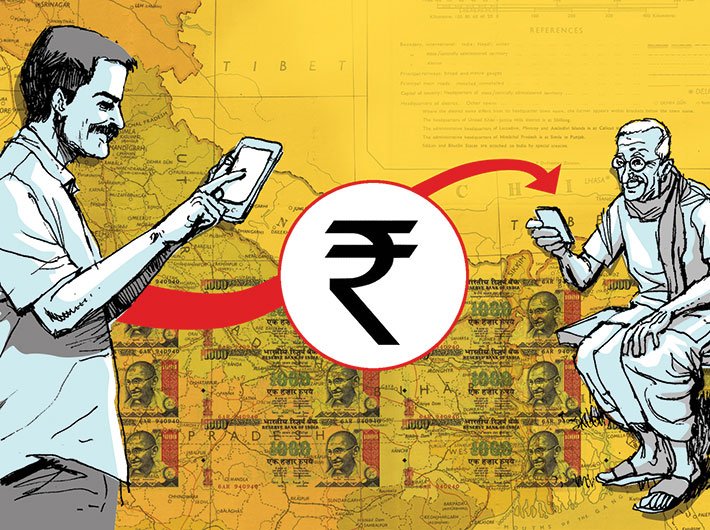
Reserve Bank of India governor Raghuram Rajan today launched the Unified payment Interface at a function in Mumbai. UPI its acronym, is billed as a giant wave in digital payments and a platform that can potentially take the wind out of cash usage habits of Indians.
The frugal technology around which it is built consists of Bank accounts, Aadhaar and Mobile. While the penetration of these in the population is around 56%, 93% and around 15%(smart phones), Theoretically, Nothing stops these numbers from reaching 100% saturation. That is why Mr. Rajan in his keynote speech emphasized the banks thinking on re-launching this service even on feature phones/basic handsets.
The technology behind this was developed indigenously by Kolkata based R.S Software which was selected by NPCI after technical evaluation.
Mr. Rajan warned that the UPI will need to deal with issues involving customer grievances, security breaches and fraudulent transactions. It would be easier for fraudsters to scam the system and steal money. UIDAI today came out with instructions to people not to share copies of their aadhaar cards with unauthorized people. The UPI is launched today in Phase-I where the users will be a closed group of around 30 banks.
It is expected to be thrown open to the public, in another two months when more banks might offer the service. It was reported that wallets too want to be part of the bandwagon and, as the RBI governor mentioned, it was open to all possibilities. It has become more than clear that if the platform gains wide acceptance, it would be very difficult for any payment platform such as apple pay, samsung pay or android pay, to gain foothold in the Indian market.
Public sector banks considered more traditional and slow adopters of technology have demonstrated that innovation can happen in government sector too. It is hoped that wallets which were presently left out of the UPI would be included pretty soon. Banks may be hesitant to allow other bank apps to link with their bank customers and this feature too might be resisted.
There are reports from other countries too about such services being either launched or developed. In 2015 in US, clearXchange announced the availability of a real-time payments solution. It was reported recently that banks have a short window of about six months to capture the P2P money transfer market before the likes of apple pay take over.

Sunday, March 27, 2016

Will Unified Payment Interface(UPI) stand up to competition


Along with top billing comes added risks or bets. Since, we know that Unified Payment Interface(UPI) is to be launched on 11th April,2016 from Mumbai, what are the chances that it will outsmart other avenues of payment.
National Payments Corporation of India(NPCI) along with RBI has taken a great leap of faith. If they succeed it would herald a new era. Otherwise there would be egg on the face of Mr. Rajan(RBI gov) and Mr. A P Hota(Chairman, NPCI).
As has been seen in history fortune favors the rich. Facebook's success was partly because everyone wanted to be in friendly terms with people of Harvard or in anyway connected to them.
In payments industry this propensity gets turned upside down because we get paid by a rich corporation/government/institution and we pay relatively poorer people/organizations with our hard earned money. This implies that any payment technology accepted by the poor will win over those meant exclusively for the rich.
Apple Inc is now launching cheaper smartphones, probably to capture the rich-rich payment market. Android Pay and Apple Pay are yet to penetrate and will take longer to gain acceptance and would in due course of time be competitors of the UPI.
The landscape has got muddled with the expected launch of payment banks coinciding with the launch of UPI. People get confused with what is what:- like for example what difference exists between payments bank and mobile wallets or what exactly is UPI?

Customer will be the king:
RBI recently took a major step towards reducing non lending activities in branches by giving out licenses to newer kinds of banks. Ten small finance banks and eleven payment bank licenses have been given out. Even predictions about an imminent market shakeup may go astray as no one knows what is in store for the cashless payment industry.
Airtel with more than 250 million customers, Vodafone with 200 million and Idea with 175 million can leverage their customer base and capture a large part of the market.
PayTM has received top billing as a wallet having a payment bank license too. It recently launched online shopping app and has crossed 125 million monthly active users. India Post, a sleeping giant has a payment bank license with current branch network more than that of SBI and potential for 10-12 times higher branch network with very wide rural reach. India Post is currently sitting on as many as twenty proposals of tie up with banks to market their products. It can better serve customers of a bank, who stay near to the post office. The transition from postal payment bank to regular bank should be seamless for such customers.
NPCI has provided the platform for the UPI and other platforms like the apple pay and android pay may take time to gain market share. Such platforms may be useful to the frequent fliers and the upwardly mobile who eventually would want their money to be transferred to an Indian Payment Bank account to pay for domestic services. What matters is the platform and not so much on which service player wins.
Customer convenience and trust in the system would help the platform gain acceptance.

Saturday, February 13, 2016

Aadhaar should be only for Indian Residents

There are demands from the Non Resident Indian(NRI,PIO) Community for aadhaar enrollment of themselves abroad. This issue goes beyond national identification systems and has security implications. I feel it should not be allowed due to the following reasons:

1) Venue of enrollment and sharing of biometric details:
Any country which hosts an enrollment center for collecting biometric details would in all likelihood ask for a copy of the biometric measurements taken. This could endanger the program. As not all foreign governments are friendly and trustworthy we cannot take chances.

2) Presence in India:
One of the foremost and indisputable aspects of enrollment into aadhaar is that all enrollments are happening within the country under controlled conditions. If enrollment is taken out of the country it will be impossible to prove that possession of aadhaar numbers implied the person was in India. This loophole could be exploited by illegal immigrants to claim that they were Persons of Indian Origin living in other countries like Bangladesh and have enrolled in their country itself and since returned to India.

3) Spurious enrollment data:
All that is being done currently to check the veracity of enrollment packets is just biometric uniqueness and the responsibility of demographic data accuracy is on the registrars. If foreign origin registrars are taken in and in case some of them for unknown reasons turn to tampering with bio-metric enrollment devices, may be unlimited number of unique bio-metric prints could be generated which when fed into the system over a long term cause it to be overwhelmed with fake and duplicate Unique numbers(Aadhaars).

4) Authentication requests from overseas:
While Aadhaar is a program to identify Indians In India, if overseas Indians are on-boarded then authentication requests from overseas may lead to violation of privacy or crimes responsibility of which could not be put on the criminal alone but also the identification system too and even worse punishment would need government to government cooperation(we already have enough enemies).

Tuesday, February 2, 2016

OMCs should collaborate with wallet companies and payment banks

Several years ago I remember the government tried to introduce card reading machines at petrol stations and they were not a huge success due to cumbersome procedure. Its probably time to revisit the idea but with slight change in modality.
Oil Marketing Companies can easily convert a major portion of their sales into cashless transactions. I usually go to the nearest petrol station to get change for five hundred or thousand rupee notes. It once occurred to me how much of cash transaction all these petrol/diesel sales generate and the added work of managing the cash. With increasing use of smartphones, a majority of whom have wallets, Is it not good if such people are offered cashless transactions by using their wallet?


A QR code scan would be all that would be needed, to pay to the fuel service station. Some sort of pull transaction may also be made where the vehicle owner/service station personnel enters an email id or mobile number and gets a request for payment in the payer's wallet application. Then on-wards a simple password authentication is all that is needed to drive away.
It should be even possible for people to pay ahead of time for the fuel and just drive away after the fill.

Wednesday, January 27, 2016

What is the minimum age for legally using mobile wallets?

Mobile phones with wallets entice customers with a strong value proposition. People may have more control over their spending if they use a wallet than if they use cash. Opposite too may be true for some users. Payment banks that will get launched in april / may this year, may want youngsters to use their wallets. Parents usually give their kids a mobile upon reaching a certain age. They may in future also want to give them pocket money via loading the cash onto their son's/daughter's wallet.

The question is how old should a person be in order to legally use wallets on his own(In India). I mentioned in one post that the yet to be launched Unified Payment Interface(UPI) would be so simple that kids would want to use it to pay for their daily dose of kinder joy. This question obviously goes to the very basic issue of a child turning major. My answer would be it depends on the temperament of the child and whether he/she will disclose the password to someone. A very apt topic of research for sociologists. May be someone could write something on "Banking for the toddlers"...(quip)

Since wallet spending is traceable, would it not be more safer for kids to carry cash in a mobile wallet than in cash? If so would it make sense to reduce the age by which a kid can use a wallet legally? The answer is a big Yes, I hope.

So a kid may want to purchase something in his school canteen or stationery and may want to use a wallet for that. He may even pay his fees or exam fees that way provided a secure/special way is found. Now are the wallet companies willing to sell their product to the youngsters is the question. And is the government willing to reduce the legal age by which a person can use a wallet offered by a payment bank? I am sure such questions are being asked only now that we have come across a special situation. The answer needs to be searched pretty soon.
Currently the only check that is done in on boarding a customer by the wallet companies is an email address verification. If aadhaar based authentication is performed then an issue may arise where age of user is known and may be too low to service the request. We all have read news reports of two year olds using apple phones to purchase goods without their parents knowledge.
P.S: I hope i am not wrong on this and that just like a minimum age for banking even wallet use does indeed have a minimum age requirement. I do understand the cash in wallet is meant to be spent and that the entire risk is borne by the user who loads cash into it.

Sunday, January 10, 2016

Terrorism takes its toll on pakistan economy

When a country accuses its neighbor of being sadist and itself goes into suspicion and psychosis/paranoia there is something wrong. Every time, Indian defense budget increases are announced the Pakistani war mongers go into a huddle. They routinely poke India by sending a few terrorists to shoot at free will and bomb a few places, all that we do is to not play cricket with them for some time. Pakistanis throw expletives at Indians at the drop of a hat. Major complaint against India being not brave enough("kayar"). Historically Pakistani economy was doing better than India's due to better policy making and American help. Since Indian government launched liberalization and reforms Pakistan has realized that it cannot compete militarily or economy wise.
Since 1993 economic growth every year in Pakistan was lesser than in India. In four of the years Indian growth was twice that of Pakistan. Read More....
This is a sign of danger for the region especially with the rise of fundamentalists. It is the right time for Pakistan, which was traditionally more developed than India, to now stop and think for its own good.
Here is a graph of how the Indian Economy is racing ahead...

 All this despite the fact that Pakistan gets a big lift from the GCC countries in the form of Aid. Even the Chinese give technical and military support. Typical backstabbers as they are, would not mind if people in there, invite Chinese angst by acting like liberating Tibet or something. Here are ideas as to what Pakistan can do in this changing times to catch up. Many of the restive western Chinese cities are populated by the Uighur Muslims who cannot digest the fact that Islam followers are outnumbered by the Buddhists. The Chinese persecution of Uighur's continues as they do that indirectly to the Rohingyas in Myanmar too. Majority of the Chinese do not consider religion as important any how.
According to Pakistani historians India did not exist before 1947(OMG, that means vasco da gama set out to find Pakistan). Several Indian cities according to them have lottaa of child beggars. These views are shared by the Americans who until recently used to ask India? Where? and some of the more racist ones acknowledge that it is still a country of snake charmers.
Much water has flown down the Ganges since the last time visiting American presidents used to be entertained by snake charmers. Some Americans think India was discovered while all the other countries in the world either existed since ages or are yet to be invaded.
After creating problems(think about bombs dropped) in Japan, Vietnam and a variety of other countries the latest being Syria.... we in India are confused who the Americans think as their enemy? Plants and vegetation?
India is the only large country in the world which buys military equipment at full cost without strings attached(Read as alignment). We are non-aligned to any military grouping. The subtle foreign policy that India extends gets it a big intangible in the form of a soft power status. Our philosophy and statecraft are time tested.
All that's happening in the world now has played out ages ago in India and lessons from them are there for all to read and imbibe(at least this is what i know from those who have read the scriptures). Our ancient and revered Bhagavad Gita is nothing but encouragement by the lord to fight a just-war for the good of mankind.
Seeing human history war is nothing new and with evolution into guerrilla tactics and terrorism("the war of shock and awe") this too shall pass.

Monday, December 28, 2015

Aadhaar, Poverty and Money

You may find something amiss here, so please ignore my eccentricities. I have set out to write something on money.
When you purchase any item or goods/service you are indebted to the person who provided you the service and hence to compensate him you pay him some money. That person in turn gets some other goods/service for himself and pays others with the money he earned from you.
People are so much interdependent on each other that we transact with money just too often to realize the true meaning of what a payment means. That we are increasingly dependent on each other and we should be thankful to each other for doing each others work in the best possible way.
I sought the help of google for the true meaning of money and gleaned some new information.

The first item on the search result was about a country(currency devalued-ringgit) and the author argued that we trade our lifetime for the salary that we earn. We work about 176 hours per month to earn the salary and we trade each day for that days earnings. If our currency gets devalued we get lesser than earlier and may not be able to afford goods that we once were able to.

The second item in the result list gave an exhaustive meaning of money: Money as survival, money as liberation, money as time, money as lubrication(read as greasing palms), money as status, money as keeping score, money as means, money as control, money as evil etc.

People are generally smart and since god has given equal intelligence, that cannot be a measure of wealth. Poor too are smart and are trying everything they can to make ends meet. Rich have not done anything great to achieve richness as has been amply substantiated by research at the Abdul latif jameel poverty action lab(JPAL). Of course there are exceptions. Poor remain poor majorly because their emergency expenditure on things such as medicare leaves them with little to live with dignity.
One important difference of developed countries from underdeveloped ones is the transparency in money flows. Richer countries have more transparent monetary transactions and their Cash-to-GDP ratio is low.
Sweden has turned cashless overtime and less than 2% of its GDP is circulating as free cash. This figure for India is around 13%. I read that in Sweden even the church/petty shops are carrying card readers. Banks have stopped taking in cash deposits and are busy disposing cash counting machines. You can guess how much of a transformation that is. Card companies are laughing their way to the bank as every transaction is getting them handsome commission.

We can learn from that country and try to predict by what time we too will go the same path. My estimation is that India will take considerably shorter time to go cashless. I think we will reach there in another 10 years ie by 2025 when our economy becomes 10 trillion US dollars.

Tuesday, December 22, 2015

Zero rating of financial applications like wallets and internet banking a must

While the government is trying to encourage e-cash and cashless payments progress has been limited.
Instead of letting zero rating of facebook where people waste their time, it would be better if government allows zero rating of the financial applications like wallets and internet banking. These applications do not take large amounts of bandwidth and should be subsidized. Anyone with a valid sim card and 2g/3g/4g capable mobile phone should be able to use the wallets without any data charges just like they are able to dial emergency numbers without any balance.
Even though India has seen adoption of mobile telephony in a big way poor people have been left in the lurch. Tele-density in the rural places is still to cross the midway mark.
While there are 950 million active mobile connections many people use dual sim and are double counted. Number of unique mobile users is just 650 million. Children below 12-13 years rarely are given mobile phones for personal use. This means more than 200-300 million adults cannot afford a mobile connection.
UPA-II had toyed with a scheme of giving people basic mobile handsets with minimum monthly recharges. The election code of conduct came into being and the scheme could not be implemented. With a change of government the scheme has not seen the light of the day.
It is predicted that by 2020 there will be 100 crore aadhaar numbers, 100 crore JanDhan Accounts and 100 crore mobile users. Payment banks would want their wallet applications to be linked to these accounts and competition will drive down costs. This potent combination of enablers will lead to a revolution in digital payments.
Hence to enable payments by the poorest of the poor zero rating of financial applications should be considered. In fact the government need not give any subsidy as the banks, wallet companies/payment banks and/or telecom operators would be more than willing to pick up the tab.

Tuesday, November 24, 2015

Digital india has a slow and steady start

It is indeed good news that DIGI-locker launched by the government has crossed 1 million users as of 24th november,2015. Visit the site to know more. Latest statistics show that the number of users is 1011787 and 1176821 documents have been uploaded.

Other initiatives of the Digital India campaign like eHospital online registration system(ORS) have also started to be increasingly used. Indian patients have traditionally been shortchanged by the government medicare system. With government hospitals overflowing with patients and a steady stream of people getting in/out to inquire or seek appointment. Now, they can book an appointment with a doctor at any of the premier government hospitals from their homes. Visit this site to know more. Latest statistics show that there are 14 number of hospitals on the portal, appointments taken today stands at 409, total online appointments at 92905, e-Hospital New patient's Appointments Taken Today at 4669, e-Hospital Followup patient's Appointments Taken Today at 3715, e-Hospital Total Appointments since 1st July 2015 at 917477. The numbers in the site need a bit of explanation to understand but since the last time i visited the site a few weeks back the number of appointments has grown by leaps and bounds. It was somewhere around 80k appointments and after three weeks i see the number has zoomed to 917k.

Biometric attendance in government departments has taken off to a great start. 612 organizations are onboard and with 170106 registered employees and 78335 present today, 4507 active devices today. Visit this site for the latest. The attendance of government employees will be slowly expanded to include all departments of the government.

National Scholarship portal at the site here is a must visit site for meritorious students from backward castes and minorities. Latest statistics show 7 departments/ministries on board using the site with 19 registered schemes and 1138 registered boards/universities and 8468953 total temporary registrations and 6828397 completed applications submitted out of which 3934310 completed applications submitted with aadhaar.

Digitize India platform is a program where government departments after scanning the documents to be digitized can take it to the final conclusion step where documents image is converted to text. The slogan here is "pixel to text" and volunteers with aadhaar can register and earn points. These points can then be redeemed for cash which gets deposited in their aadhaar linked bank account. Visit this site for the latest news. Statistics from this site say that there are 261439 Documents with 2415448 Snippets out of which 2119267 are Digitized and there are as of now 14088 contributors.

Finally the My Gov website has a cool interface and conducts several contests and actively seeks suggestions from the people in the running of the government. Here is the site. Statistics show that there are 1.58Million Registered Members of MyGov and 155.16K Submissions in 370 Tasks and 1.29Million Comments in 404 Discussion Themes. I have recently suggested in the MyGov site that the government should set targets to every department and depute resources to oversee digitization. If needed they should also take help of volunteers such as engineering college students who want to do internship. I have also suggested to the same site that the government should reveal the identity of those employees who are habitually flouting rules regarding attendance in office.

This is definitely not the end of the list. It is just to show you how a beginning has been made. There is talk of launching a dashboard depicting all the progress happening with real-time statistics from government departments. Such an open and transparent system would go a long way in creating confidence among people and people may draw comfort in the improving government services. I also happened to visit a site which does data visualization of government statistics and presents statistics in an easy to understand manner.
Just the other day i read news about blood banks being mandated to reveal statistics of daily blood availability in a portal. Human milk banks are being launched across states where infants could be given nourishment in case they do not receive it from their mothers. Small steps like these have endeared the new government with the people. Saw a dashboard of the rural electrification progress, dashboard of employees provident fund and several other organizations. Conclusion is that India has started dashing towards the finish line.


This is my earlier post on the digital India theme.... => http://aadhaar4governance.blogspot.in/2015/02/digital-india-to-rely-on-aadhaar.html 


Wednesday, November 18, 2015

Unified Payment Interface - An eagerly awaited service


Imagine more than a billion users of a payment service so easy to use, so secure and so simple that even kids would like to use it to pay for their daily dose of kinder joy. This would be the mega mega mega event that finally would drive the last nail in the coffin of cash here in india.

The idea or motivation for a unified payment interface arose after significant enrollment of people in the aadhaar project. Payment banks were conceived by RBI as banks which would operate to ease payments using electronic means and would only offer deposits and no lending. Eleven licenses were handed out majority of them to telecom firms and a few industrial houses with deep pockets.

Mobile money transactions have lately crossed 10k crore mark in terms of value(monthly). IMPS even though secure and relatively free of fraud had seen limited uptake. Unified Payment Interface which is built on top of IMPS would use any of the publicly known identifiers like aadhaar number or email Id or mobile number or virtual payment Id as a token in payment transactions. No one would know whether a bank account or a payment bank account or a wallet is linked with these identifiers at the back end. This makes the process of transferring money from the mobile a lot more easier.

Not only this, you could also request someone to take money from your account by sharing your token and then authorizing the transaction by entering a password in your banking app.


Now comes the most elegant part. Smart phones with apps from either your bank/payment bank/wallet would have a dashboard where you could enter anybody's identifier and amount to be transferred. The money transfer would happen immediately. What is more you could set a limit to the amount that can be transacted daily, monthly and per transaction also. Needless to mention this app will be very very popular as

a) It would be usable throughout the country for every conceivable payment, be it to purchase vegetables or bus ticket while traveling or any other small ticket transaction.

b) This interface would be really simple and easy to use.

c) This interface will be the one provided by the government and hence meant for the masses.

Finally by end of 2016 we would witness a moment so great that it would be mentioned as the dawn of an era in cashless payments in India.

Thursday, November 5, 2015

How telecom companies and websites collaborate to milk customers

You might have a limited data internet connection. If you visit some site where videos play automatically it consumes nearly 20-30 MB of your data at one go. News sites serve advertisements at the cost of consumers.
Let's calculate:
My internet connection is a BSNL(cheapest) USB Dongle the latest data pack for which i have recharged is offering 5 GB for two months(60 days) with cost of 451 rupees. Hence 10 MB costs nearly 1 rupee to me. One advertisement costs nearly 2-3 rupees. Over several browsing sessions this may come to nearly 10-15 rupees per day.
Automatic page refresh of news sites is another technique these sites drive up the data traffic to their sites.
People wishing to watch news are being bombarded with unwanted videos and causing lot of unnecessary traffic. Someone needs to take up the cudgels against such fleecing by sites/telecom companies.
This they claim as a means of monetization and revenue generation.

Saturday, September 19, 2015

Aadhaar opponents weakening the project

A matter of utmost urgency is to give strength to the aadhaar project. Instead activists have been able to weaken the project by the following ways.
1) Misleading people into multiple registrations.
2) Making people fear for privacy and consequently people were unwilling to divulge their mobile number and email id in their enrollment. Hence it has become difficult for such people to update their demographic data.
3) In DBTL lobbying for cash transfers even without aadhaar linking and hence giving scope for corruption.
4) Suggesting simpler authentications like mobile OTP instead of biometric authentication which can cause the project to be imperiled and that may be misused for corrupt purposes.
5) Going hammer and tongs against the very foundation of the project and trying to declare it unconstitutional, illegal and dangerous.
6) Without any sense of conscience the opponents are just about making one after another inconsistent arguments. First they argue that aadhaar number will not be universal and people will be excluded. Then change tack and say "Each and Every person is being given an aadhaar without proper verification" and it has become free for all. Which suggests that some people should not be given aadhaar which contradicts universality principle/inclusion objectives.
7) They accuse that it would be a privacy violation if aadhaar keeps track of the location/address of a person; on the other hand they want aadhaar to be accurately used as an address proof. In fact they even want aadhaar to keep track of all past addresses of a person. It baffles me as to how aadhaar can be used as an address proof without it storing address of the person. Some fear that it may be used to locate whereabouts of persons, but conveniently forget that it is apps like facebook/uber/ola etc that keep a check on your whereabouts and not some overzealous govt employee who is out to profile you.
8) Another inconsistency in the opponents arguments is about digital lockers. First they say people should not be denied any benefit for want of aadhaar card and then add that digital lockers are being given to only people with aadhaar. Even a first standard student understands that the concept of digital locker is like any other service such as google drive or dropbox that is served from the cloud and used to backup files. What stops these morons from using such services without requiring aadhaar.
9) On the one hand they fear being tracked for purchases of rations and on the other express sadness at the poor aadhaar seeding in databases. So much so that they want both aadhaar seeding percentage to increase and aadhaar should be kept voluntary all the while.
10) On the one hand they say aadhaar based DBT does not work and on the other hand concede that only 30-50% of the transfers are aadhaar based and conclude that aadhaar based DBT is a failure.
11) On the one hand they fear about the excessive powers of the govt in tracking money flows and on the other hand express frustration at the slow speed with which databases are being inter-linked. Even going to the extent of proclaiming that aadhaar cannot be used to reduce black money in the economy. If the govt does haste, they criticize that and if it is slow in some way they criticize that too.

Finally the opposition for aadhaar comes from elderly people who understand privacy but not technology. Also from people who don't seem to care too much about corruption. I mean "I know it exists but i don't bother much about it as long as it does not affect me" kind of attitude.

Sunday, August 23, 2015

String Theory

Increasing usage of English both as a language in business communications and informal communication has given scope of using the language in machinist, twisted and contorted way.
I may have to warn my readers that despite good speaking and writing skills in English i am no fan of the language. Coming to computers there are times when computers spew out terse error messages, welcome messages or communication generated by programs. Many people do not "get it" when computers spew out such messages as they lack personal touch or any sort of clue that the computer is done with processing and has generated the response.
We can see similar pattern when celebrities hire professionals who manage their image/reputation. Press and media always want to get sound bytes from people involved in any incident. Professionals are hired to give out statements or issue clarifications on behalf of their clients. They just read out text which often gives a different version of the matter which protects the interests of their customers. I call this deployment of a string. A classic example that i recall is when A R Rahman(the Mozart from madras) spoke to the media, in his initial career days, he was projected as a quiet and demure person, even going to the extent of being dumb. Image consultants had a torrid time convincing people that the composer does indeed speak.
People always want to be shown in good light or like to be praised. Smt Sonia Gandhi and Pappu-G struggle so much to deliver inspiring speeches, that they are being ridiculed in the social media. Their struggles with delivering speeches including the infamous cheat sheet, is a talk of the town. Indians struggle with speaking good English or getting the American accent right. Sonia Gandhi struggles with getting her Hindi pronunciation right and Nandan Nilekani(Creator of aadhaar, having stood for elections and lost) struggles to speak in Kannada. Linguistically challenged people they may be.
Teachers like me in schools and colleges face a dilemma when it is required to teach the definition of something. Sentences upon sentences to be mugged by the students aka virus style(definition of a machine) in the movie "three idiots". It looks as though people have trains of strings/dialogues/quotes instead of thoughts in their mind. In a study which appeared in the paper today it's found that people are developing amnesia by being addicted to the internet. They don't need to remember any facts when they can just google about it. Information overload is somehow rendering people disabled(intellectually).
Contests are being conducted based on novelty of search strings on google.
Coming back to deployment, we all have been to colleges and been afraid of the ragging. Some of us have been ragged. Once upon a time, the ragged ones were the ones who ragged. Ragging involved "Instructing juniors" to do certain things. This verbal communication of instructions is what i call deployment, obviously against ones wishes.
There can be another kind of deployment a much more positive one by a leader. A leader like narendra modi spells out certain instructions in the form of plain speak or cry or a slogan.
Coming to software, strings are considered to be the basics of any language. In computers strings can be made up of ones and zeros and taken eight or sixteen at a time be interpreted as alphabets or digits. Deployment in some sense of code/software/program is similar to what i described earlier. When software is deployed it leads us to a system. A software/hardware combo.
In one of my classes i joked about a Hindi movie dialogue(again a string) which goes like this=> After having been beaten black and blue paresh rawal says government should make a system, a code of conduct for criminals. Hit where they can hit. Why do they hit where they should not(in the groin).
Obviously with little humor in the example i did not get the students interested in a system.
On another day when i needed to teach software architecture, i had to explain that a system needs to be taken apart and its parts and their interrelationships are to be studied. I gave an example of kumbalakayi or pumpkin in kannada. On auspicious occasions in olden days it was a practice to sacrifice animals. Nowadays they fill red liquid in a pumpkin and throw it on a stone to cut it to pieces. I said do the same for a system. Throw a system on to a big stone and let it break into pieces. Then study the parts. Very little humor again.
Coming back, in list processing/predicate logic every sentence is associated with a truth value and a grammar is a rule to form compound sentences or to deduce from a given sentence(predicate logic). Machines are very close to borrowing intelligence from humans. So we are at a point in history where we should think about all those spheres of life where machine learning and robotics would impact us.
I have gone through books on string theory in physics too. To compound matters further all matter is supposed to be formed of strings. What you are reading is a string too.
I don't have a particular style of writing and agree that there are great writers and poets in this world who create magic out of strings. Perhaps trains of thoughts in our minds too have a music or symphony that can be deciphered some day.

Thursday, June 18, 2015

Advantages of Internet banking, mobile banking, wallets and apps

The world around us is enveloped with gadgets of all kinds. We use mobile apps to travel new places, use internet banking to send money to others, mobile banking to do the same with frugal technology and wallets a newly emerging class of bank accounts used to transact for small amounts.

Trends suggest that internet banking is growing at more than 30% in India and the number of unique users crossed 40 million recently(June,2015). This number is nearly 20% of the regular internet users in the country which has crossed 200 million. A majority of the internet users are accessing the internet through their mobiles.

More than 100 million Indians are on Facebook. Internet access remains way too slow and expensive. Its been only five or ten years since common men and women in India other than techies started using the internet.

Apart from keeping in touch with friends via social networks people are using internet for net banking which has caused a lot of excitement in the banking industry. People don't visit banks as much as they would otherwise and there is a perceptible fall in branch footfalls. Tech savvy investors are dabbling in stock markets and benefiting immensely from internet for transactions.

For a large number of internet users who travel in trains, online railway ticket booking is a very useful activity. Several travel and hotel room booking sites like makemytrip, travelguru etc have made travel easier.

Mobile bill payment, Insurance premium payment, movie ticket booking, air ticket booking, electricity bill payments, property tax payments and a variety of  unheard uses of internet banking has made it a must have. I advise those unwilling to take the plunge to try it soon.

Online shopping sites like flipkart, amazon, ebay, snapdeal, myntra etc are doing roaring business. New startups with unique concepts are being launched every day. Students of computer science are gung ho about android app development and working hard to get premium positions in the industry.

Sky is the limit for the digital revolution currently played out and its causing lot of changes in the lifestyle of people. Digital India with the slogan of presence less and paper less governance promises the sky for the people. Aadhaar has been a mixed success so far as its utility as a financial address is yet to be fully realized. It would be good to avoid the pitfalls and use this technology only for the benefits that it promises and not as a tool to harass or intimidate people.

Saturday, April 11, 2015

National Informatics Center - At the forefront of innovation-Oh Really?

I just went to the national informatics center website casually thinking that it will just be another government website and what i found really enticed me. Project achievements in individual states and throughout the country looked like a hundred revolutions in a micro universe of its own.
E-Governance projects of the government of India have only demonstrated that things can be done and that too despite the system than because of it. That these projects have been successful shows that change can be brought about even by the so called "inefficient" and "lethargic" bureaucracy.
Government departments to share source codes of E-governance apps that they developed. This is a news that should warm the cockles of the heart of any E-Governance enthusiast.
However, Our government is exhibiting myopic vision by relying on the national informatics center for each software that they need. What they should actually be doing is to call for tenders and award to the lowest bidder. A local ecosystem of software developers will emerge who will actively involve in ideating and conceiving E-Governance projects.
The problems of each project implemented by NIC is that it appears more like a technology demonstrator and not some project that was meant to be used. Despite working since so many years on digitizing PDS system progress in many states has been tardy. It seems as though computerization still is resisted in government circles.
There are a few bright spots in the administration like Shri. R S Sharma, Secretary in the Department of IT.
I would like to talk about a few remarkable achievements of the NIC.
Aadhaar Enabled Biometric Attendance System is one such project. This project if implemented by every department right down to government schools then it can bring in a lot of efficiency.
Others like Bhoomi project in karnataka and clones in other states called by a variety of names if implemented on a national scale with inputs from ISRO and all departments, it would be awesome.
Some of the projects like the dissemination of information during 2014 general elections are the ones where NIC likes to pat its own back. 
NIC has developed software for automation of courts but this is not being taken up for further enhancement. 
NIC has implemented software for automation in government hospitals. 
NIC has developed software to register marriages. 
It has developed software to register land records. 
It is behind the Direct Benefit Transfer program and the software that supports the DBTL(world's largest social sector scheme) was developed by NIC.
You just name any field the government works in and more often than not you will find an NIC application running.

Please visit this site for more info=> http://www.nic.in/projects

This site mentions about nearly 1096 projects that NIC has dipped its fingers into.
It just needs a grand visionary like Narendra Modi to transform these standalone applications into a single seamlessly unified system served from government owned data centers(cloud).